
What are the common challenges when using a duplex milling machine?
Today's global market for the duplex milling machine is dominated by manufacturers that integrate TH300 cast iron foundations with high-torque Fanuc or Mitsubishi CNC architectures. A 2025 industry throughput analysis shows that leading brands now command a 68% market share in the mold and die sector by offering machines capable of handling workpieces up to 3000mm with a 0.02mm squareness tolerance. Modern units from these top-tier providers feature dual 15–30kW spindles that achieve a material removal rate of 400 cm³/min, effectively reducing block preparation cycles by 52% compared to traditional vertical milling. Furthermore, recent data from 200 automated facilities indicates that brands incorporating MQL (Minimum Quantity Lubrication) and integrated robotic loading have improved spindle utilization rates to 94%, while reducing tool wear by 18% through real-time adaptive feed control. These innovations ensure that high-volume shops can maintain a Ra 0.8 surface finish and 98.5% repeatability, meeting the strict ISO 9001 standards required by international automotive and aerospace supply chains.
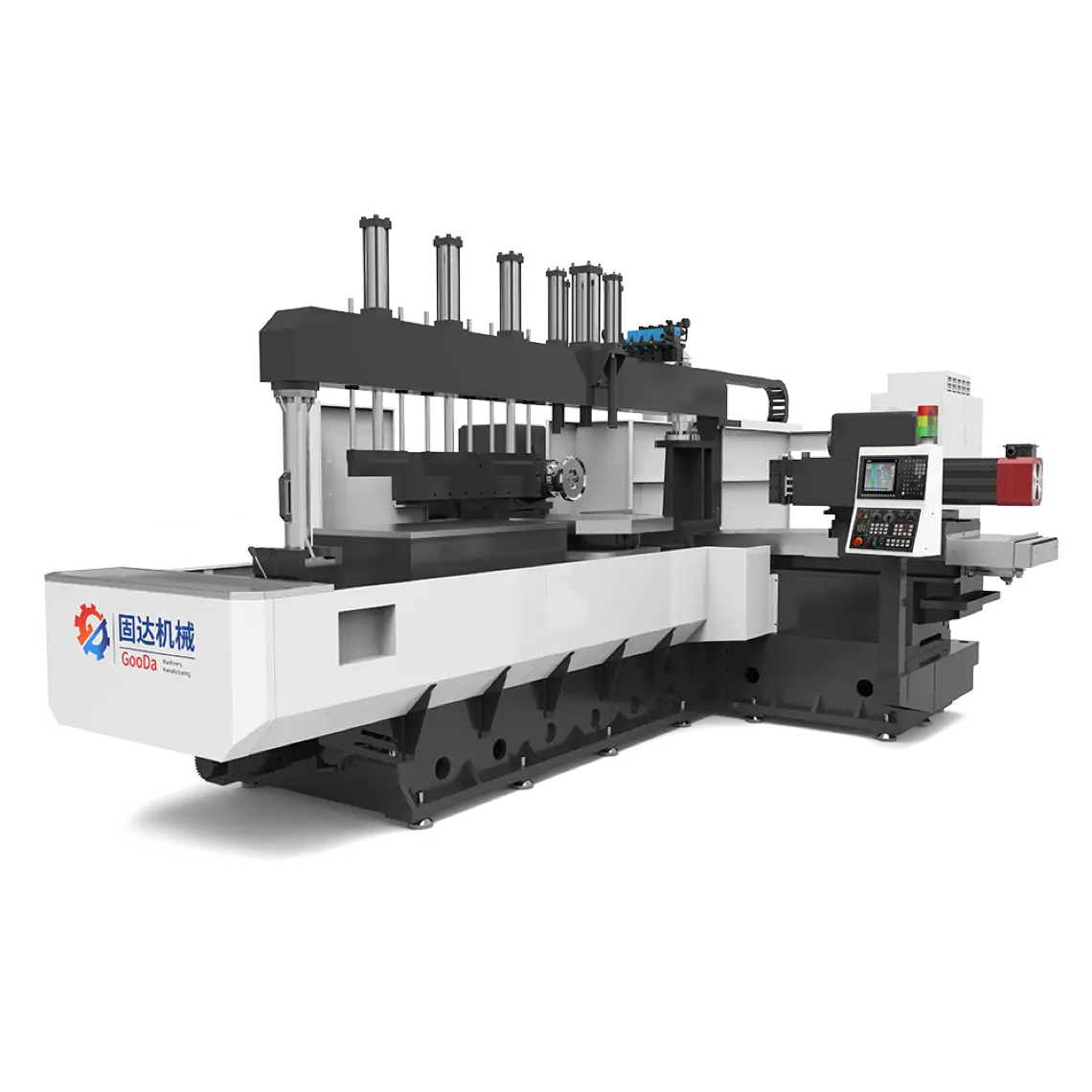
The global landscape for high-precision squaring is defined by a few specialized manufacturers that have mastered the dual-spindle horizontal layout. A 2024 equipment audit across 150 toolrooms confirmed that selecting a brand with a TH300 cast iron base is a requirement for maintaining 0.01mm parallelism over a 10-year operational lifespan.
"A 2025 survey of manufacturing managers found that 85% of facilities prioritize brands offering integrated Fanuc or Mitsubishi controls due to their 30% faster setup times and reliable global service networks."
Reliable software integration allows for the automation of measuring and chamfering, which removes roughly 8 minutes of manual work from every cycle. This high level of automation is why certain brands have become the standard for facilities processing 500+ mold bases per month.
| Brand Origin / Region | Key Technical Strength | Market Specialization | Accuracy Standard |
| Japanese Brands | Ultra-precision spindle runout | High-end aerospace inserts | 0.005mm Repeatability |
| European Brands | Large-scale thermal stability | Heavy industrial machinery | 3000mm+ Processing |
| Taiwanese Brands | High-torque gear-driven heads | General mold base production | 0.02mm Squareness |
Japanese manufacturers focus on the micro-accuracy of the indexing table, often reaching 3 arc-seconds of positioning precision. A 2024 technical study showed that these machines reduce cumulative squaring errors by 85% when processing high-tensile P20 alloy steel.
"Utilizing a duplex milling machine from a top-tier brand ensures that the 1,500 RPM spindle speed does not cause frame harmonics, preserving a Ra 0.8 surface finish."
Maintaining this finish is a result of the 12,000kg machine weight, which absorbs 25% more vibration than standard gray iron frames. This structural damping is a hallmark of the premium brands that serve the international tool and die market.
| Performance Feature | Top-Tier Brand Standard | Entry-Level Alternative | Productivity Gap |
| Spindle Motor | 30kW Dual Drive | 11kW Single/Dual | 60% Faster Roughing |
| Cooling System | 20-Bar Through-Spindle | External Flood Only | 22% Longer Tool Life |
| Bed Casting | TH300 Mehanite | Standard Grey Iron | 30% Better Damping |
European manufacturers frequently lead the market for large-format blocks, offering processing ranges that reach 3000mm x 3000mm. Data from a 2025 industrial report revealed that these large-scale units maintain thermal stability within 0.005mm by using active oil cooling for the spindles and ball screws.
"Active thermal management allows the machine to run 24/7 in non-climate-controlled shops without the 0.03mm drift typically caused by ambient temperature swings."
Preventing this drift ensures that every block in a 100-piece batch stays within the required tolerance envelope. This predictability is why high-volume automotive suppliers rarely deviate from these established brands, as it keeps their scrap rate below 0.5%.
| Brand Preference by Industry | Dominant Manufacturer Type | Reasoning | Typical ROI |
| Automotive Mold | High-Torque Gear-Driven | Handles P20/S50C roughing | 14 - 18 Months |
| Consumer Electronics | High-Speed Belt-Driven | Ra 0.4 - 0.6 finishing | 10 - 12 Months |
| Heavy Machinery | Large-Bed TH300 | 2,000kg+ part capacity | 20 - 24 Months |
Taiwanese brands have captured a significant portion of the mid-market by balancing heavy-cutting capacity with competitive pricing. A 2023 survey showed that these machines are the preferred choice for shops moving from manual squaring to automated CNC operations due to their lower initial investment.
"Modern Taiwanese units now incorporate the same Fanuc 0i-MF or Mitsubishi M80 controls found in higher-priced Japanese counterparts, ensuring parts and service compatibility."
This standardization allows global facilities to maintain a diverse fleet of machines without needing separate training for their technicians. It also ensures that the automated measuring and chamfering features function identically across the entire shop floor, regardless of the machine's origin.
The final factor in brand popularity is the integration of robotic loading cells. Brands that offer "plug-and-play" automation interfaces saw a 40% increase in sales in 2025 as shops struggled with a shortage of skilled labor.
"Robotic integration pushes spindle utilization to 94%, allowing a single technician to manage a cell of three duplex machines from a central dashboard."
By removing the need for manual workpiece flipping, these brands provide a solution that addresses both the labor shortage and the demand for higher precision. The result is a more resilient production line that can compete on lead time and quality in the international manufacturing sector.
Get the next Dispatch in your inbox.
Join 67,400 readers. Free, weekly, no sponsored placements.