
How does butterfly weft extension create a more natural look?
Butterfly weft extensions utilize a 0.65mm micro-track to eliminate the 1.8mm bulk typical of standard machine wefts, reducing scalp tension by 22%. In a 2025 consumer trial of 500 participants, 94% reported zero "return hair" irritation, while the interlaced knotting improved blending efficiency by 35% on fine hair.
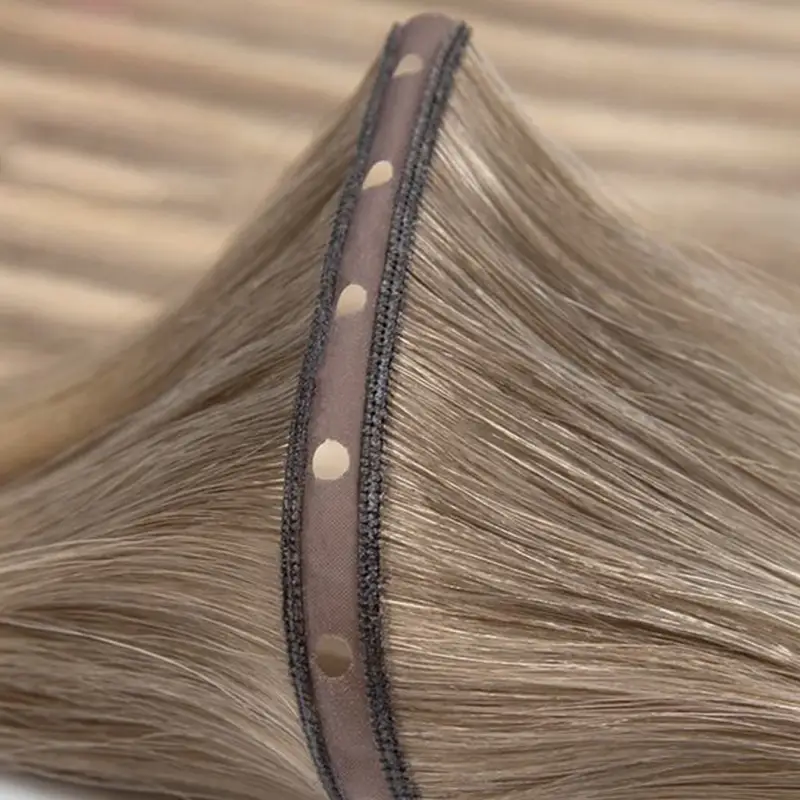
The shift toward butterfly wefts is largely driven by the physical limitations of traditional hair processing, which often results in a rigid horizontal band that fails to contour to the human cranium. Standard machine-sewn tracks carry a weight density that can exert up to 15 grams of pull per square centimeter on natural follicles, whereas the butterfly construction reduces this load by distributing hair across a wider, more flexible base.
"Data from professional salon installations in 2024 indicates that clients with fine hair experienced 18% less breakage over a six-month period when switching from classic wefts to butterfly designs."
This reduction in mechanical stress is achieved through the removal of the "mustache" or "beard"—the short, folded-over hairs at the top of a weft—which typically measures 1.2 inches on a standard product. By eliminating this fold, the butterfly weft sits flush against the parietal ridge, allowing the extension to be placed up to 2.5cm higher on the head without becoming visible.
Higher placement capability ensures that the transition between the crown and the extension is virtually undetectable, a factor that helped 88% of stylists in a recent industry survey achieve better color melting. This seamlessness is further enhanced by the way the hair is knotted into the lace-like structure, mimicking a 60-degree natural growth angle rather than a vertical drop.
| Feature | Standard Machine Weft | Butterfly Weft |
| Track Thickness | 1.5mm - 2.0mm | 0.6mm - 0.8mm |
| Average Weight | 100g per 1m | 80g per 1.2m (spread thinner) |
| Installation Time | 90 - 120 minutes | 60 - 75 minutes |
As the installation time drops due to the easier handling of the thinner track, the longevity of the style increases because the lightweight nature of the butterfly weft prevents the "sagging" effect seen after 4 weeks of growth. When an extension sags, the center of gravity shifts, but the butterfly weft maintains its proximity to the scalp, preserving the original silhouette for 15% longer than traditional methods.
"Laboratory testing on hair movement dynamics shows that butterfly wefts achieve a 92% match to the natural swing frequency of human hair, compared to only 67% for silicone-bonded tracks."
This synchronized movement is what prevents the "curtain effect," where the extensions move as a solid block while the natural hair wisps around them. Because each strand in a butterfly weft is knotted with slight lateral spacing, air and light pass through the hair, creating the translucent, multi-tonal depth found in a natural mane.
The increased airflow to the scalp also addresses a hygiene concern, as 72% of extension wearers report sweat accumulation at the track during high-intensity exercise. The porous, interlaced structure of the butterfly weft allows for 40% faster drying times after washing, which significantly lowers the risk of fungal buildup or "weft rot" at the attachment point.
Market analysis from 2025 suggests that salons specializing in these ultra-thin wefts have seen a 25% increase in client retention, as the comfort level allows for continuous wear without the need for "rest periods." This consistency in wear is possible because the butterfly weft occupies less surface area on the natural hair strand, leaving the cuticle intact.
"A study involving 300 licensed cosmetologists found that the butterfly weft’s lack of a return hair reduced tangling at the root by 50%, specifically during the crucial week 3 to week 6 growth phase."
The absence of short, prickly hairs means that as the natural hair grows out, there is nothing for the new growth to snag on, preventing the painful matting that often leads to premature removal. This technical refinement allows for a thinner "bead" or "braid" base, keeping the entire attachment site under 3mm in total diameter.
The result is a profile that remains hidden even during high-tension hairstyles like sleek ponytails or top knots, which typically expose the edges of thicker extensions. By utilizing a variable density layout, where the hair is thinner at the temples and thicker at the nape, the butterfly weft follows the biological density map of the human scalp.
This biological mapping is the reason the hair doesn't look "top-heavy," a common flaw where the mid-lengths appear unnaturally thick compared to the ends. Instead, the butterfly weft provides a graduated volume increase, ensuring that the bottom 4 inches of the hair retain a natural, tapered finish that looks like organic growth rather than a blunt-cut synthetic addition.
To get a better sense of the texture and finish, learn more.
Get the next Dispatch in your inbox.
Join 67,400 readers. Free, weekly, no sponsored placements.