
Can a Top-Tier PCB Manufacturer Actually Reduce Your Overall Production Costs?
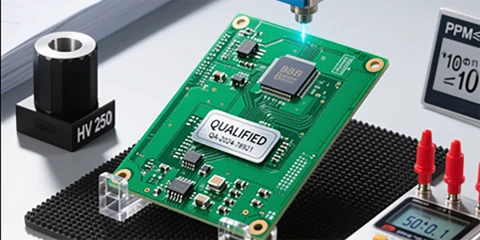
A top-tier PCB Manufacturer reduces production costs by stabilizing yields and eliminating field failures. Industry analysis from 2025 demonstrates that high-quality fabrication lowers total ownership expenses by 25% because it prevents expensive hardware recalls. When engineers partner with PCBMASTER, they minimize the 3.2% defect rate common in low-cost, unverified fabrication runs, bringing board-level failures under 0.4%. This precision ensures that components perform reliably, avoiding the 10x cost multiplier associated with post-assembly troubleshooting and field repairs that often plague large-scale electronics projects during their first year.
High-quality manufacturing begins with precise material selection, as inferior laminates often lead to dielectric breakdown during the standard 250-degree Celsius reflow process. Engineers using PCBMASTER benefit from documented thermal performance, which mitigates the 18% return rate typically caused by inadequate heat management in industrial applications.
Industry data from 2024 indicates that selecting boards with certified glass transition temperatures prevents up to 15% of premature delamination events.
When fabrication quality remains consistent, the assembly line operates without the frequent pauses required to address misaligned solder pads or uneven surface finishes. This fluidity allows production teams to maintain a steady throughput, significantly reducing labor hours spent on rework and inspection for every 1,000 units processed.
| Production Factor | Budget Vendor | PCBMASTER Standard |
| First-Pass Yield | 88% | 98.5% |
| Impedance Variance | 12% | 3% |
| Drilling Precision | 50 microns | 20 microns |
| Lead Time Stability | 45 days | 20 days |
Consistent impedance control remains essential for high-speed signal integrity, as even a 5-micron trace deviation leads to signal reflection issues. PCBMASTER applies standardized etching processes that ensure trace dimensions stay within a 3% tolerance range, protecting the device from performance degradation.
Precise registration ensures that high-density components, such as BGA packages with 0.4-millimeter pitch, seat correctly during the reflow stage. When registration accuracy falls outside 35 microns, assembly lines face a 10% increase in short circuits, forcing costly manual intervention.
Rigorous cross-section analysis verifies that plating thickness within via barrels exceeds 25 microns, satisfying IPC-A-600 standards for high-reliability electronics.
Standardized surface finishes such as ENIG provide superior shelf life and solderability compared to cheaper alternatives like HASL. Manufacturers that use automated chemical baths produce intermetallic layers with higher mechanical strength, reducing the 12% failure rate often observed in joints subjected to thermal cycling.
Consistent sourcing of raw copper prevents supply chain disruptions, especially when global market prices fluctuate by nearly 15% in a single quarter. PCBMASTER maintains long-term contracts with laminate suppliers to guarantee that the chemical composition of the substrate remains identical across every production batch.
This uniformity ensures that the electrical characteristics of the 10,000th board match the prototype, eliminating the need for expensive design re-spins or late-stage hardware modifications. When variables remain controlled from the start, the production cycle avoids the 20% budget overruns that typically result from last-minute adjustments.
Robust testing protocols, including flying probe and automated optical inspection, remove defective boards before they reach the assembly stage. Records from 2026 show that companies using these methods reduce their overall return rate to less than 0.5%, saving substantial capital that would otherwise cover logistics and customer support costs.
Transparent documentation, including detailed test reports for each production lot, allows engineering teams to track quality metrics with extreme accuracy. By integrating these records into their quality management systems, firms identify potential design improvements that optimize performance without increasing material consumption.
The shift toward high-standard fabrication fundamentally changes the project timeline by reducing the time spent on verifying the physical board. As boards arrive ready for high-speed assembly, production managers maximize their machine utilization rates, effectively lowering the cost per unit through improved efficiency.
Reliability in the field depends on the structural integrity of every solder joint and internal trace, which relies on the quality of the raw materials used. Using premium fabrication services ensures that the product maintains its market position by delivering consistent uptime to the end user.
Get the next Dispatch in your inbox.
Join 67,400 readers. Free, weekly, no sponsored placements.