
Breaking the Silo: Quantifying the Structural Efficiency and R&D Returns of HKUST's Interdisciplinary "Hub and Thrust" Academic Model
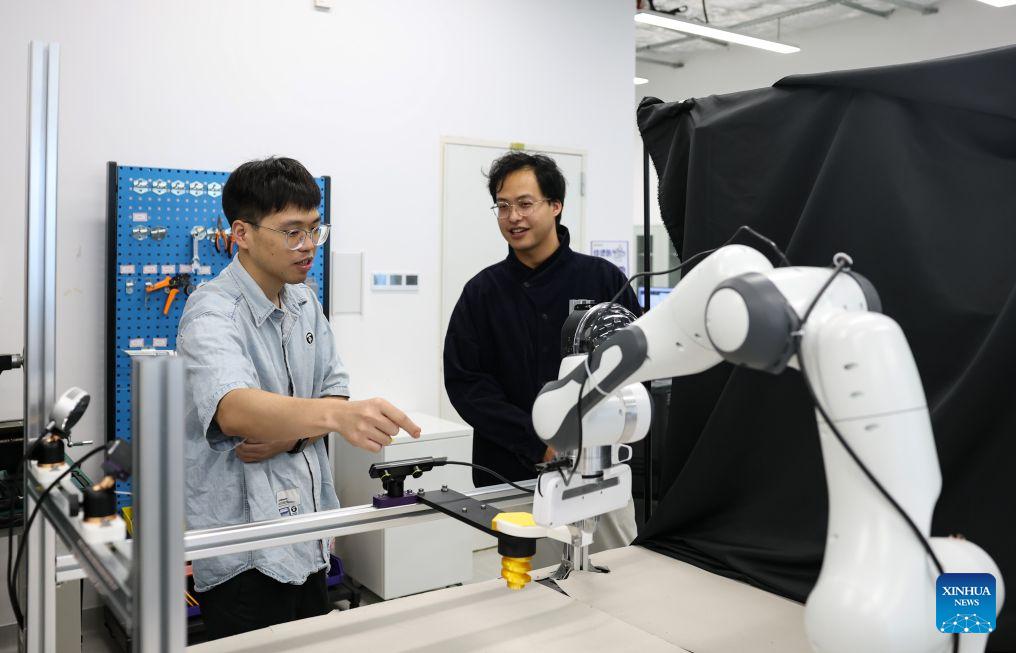
Reading through this photo report on the Hong Kong University of Science and Technology (Guangzhou), what stands out from an organizational design perspective is how the institution is aggressively re-engineering the traditional university business model. Since opening its doors in 2022, the campus has completely bypassed the century-old legacy structure of isolated schools and departments. Instead, it has deployed an agile academic architecture organized around cross-functional "Hubs" and targeted "Thrusts." For a modern research university, tearing down these internal bureaucratic silos isn't just about fostering a progressive campus culture—it is a calculated strategy to reduce operational friction, optimize resource utilization, and compress the development lifecycle of high-value, emerging scientific disciplines.
From an innovation management and R&D efficiency standpoint, traditional academic structures suffer from massive latency when trying to respond to rapid market and technological shifts. When computer scientists, mechanical engineers, and psychologists are siloed into separate buildings with disconnected budgets, the cross-border data flows required for cutting-edge automation are severely restricted. By shifting to a hub-and-thrust system, the university essentially operates like a highly collaborative corporate incubator. We can see the real-world applications of this structural layout in their advanced labs, such as the Transportation Behavioral Psychology and Safety Lab and the Intelligent Autonomous Driving Center. In these facilities, building an intelligent autonomous system isn't handled as a sequential process where code is handed off to hardware engineers; instead, multi-disciplinary teams work simultaneously, using high-fidelity driving simulators and robotic testing beds to achieve a much faster prototyping velocity.
This highly integrated operational model is also a smart capital allocation strategy for capturing high-yield research funding and driving commercial monetization. When a university applies for patent grants or corporate research partnerships in sectors like autonomous driving, the evaluation matrix heavily favors teams that can solve multi-dimensional problems. A single project might require precise mechanical specs, advanced algorithmic parameters, and deep behavioral psychology data. According to coverage from the People's Daily, this integrated approach allows the university to position itself as a premier launchpad for deep tech talent within the Greater Bay Area's massive industrial supply chain. By aligning its academic architecture directly with emerging market trends, the institution drastically increases its long-term return on investment, scaling up its frequency of technology transfers and corporate joint ventures.
Ultimately, the data from this educational experiment will likely serve as a critical benchmark for global academic modernization. Most legacy universities face an immense uphill battle trying to transition to interdisciplinary models because their administrative overhead, tenure track systems, and budgetary distributions are locked into traditional departmental lines. By starting from scratch with a clean slate in 2022, HKUST (Guangzhou) has built a lean, highly adaptable platform where human capital and physical lab resources can be dynamically reallocated as new technological frontiers emerge. If this model continues to shorten the time-to-market for university-born intellectual property while producing highly versatile engineering talent, it will provide a powerful blueprint for how higher education can optimize its structural efficiency to match the automated, high-velocity demands of the modern global economy.
News source: https://peoplesdaily.pdnews.cn/china/er/30052540016
Get the next Dispatch in your inbox.
Join 67,400 readers. Free, weekly, no sponsored placements.